What Are AI Agents? The Shift That Changes Everything
AI agents aren’t chatbots with extra features. They’re autonomous systems that take goals, break them into steps, use tools, and deliver results — without you managing every click. This is the most important technology shift since SaaS itself. Here’s what it means for your business.
An AI agent = a brain (the LLM that thinks) + a harness (the framework that gives it hands). The brain is Claude, GPT-5, or Gemini. The harness is what lets it browse the web, control your computer, write code, manage files, and operate your tools. Neither is useful alone. Together, they create a digital worker that can execute multi-step tasks autonomously. In 2026, agents from Anthropic, Google, OpenAI, Perplexity, and open-source projects like OpenClaw are already replacing workflows that used to require 3–5 separate SaaS tools.
What Is an AI Agent (and What It’s Not)
An AI agent is an AI system that can take a sequence of actions to complete a multi-step goal — not just answer a question. That single sentence separates agents from everything that came before.
A chatbot tells you how to book a flight. An agent actually books the flight. A chatbot explains how to create a marketing report. An agent opens your analytics dashboard, pulls the data, creates the report, formats it, and sends it to your team. The difference isn’t intelligence — it’s action.
Until late 2025, AI tools were fundamentally reactive: you prompt, they respond. You copy the response, paste it somewhere, and continue your workflow manually. AI agents break that loop. You describe an outcome (“research competitors and create a comparison spreadsheet”), the agent plans the steps, executes them using real tools (browser, file system, APIs), handles errors, and delivers a finished result.
This isn’t a hypothetical future. In March 2026, Nvidia CEO Jensen Huang said “OpenClaw is definitely the next ChatGPT” — referring to the open-source agent that hit 307,000 GitHub stars faster than any project in history. Anthropic shipped Claude Computer Use, letting Claude literally control your desktop. Google launched Antigravity, an agent-first development platform. Perplexity released Computer, an autonomous digital worker that orchestrates 19 AI models simultaneously. The race is on.
The Brain vs. The Harness: The Most Important Distinction
This is the concept most coverage gets wrong, and it’s the single most important thing to understand about AI agents. Every agent has two layers:
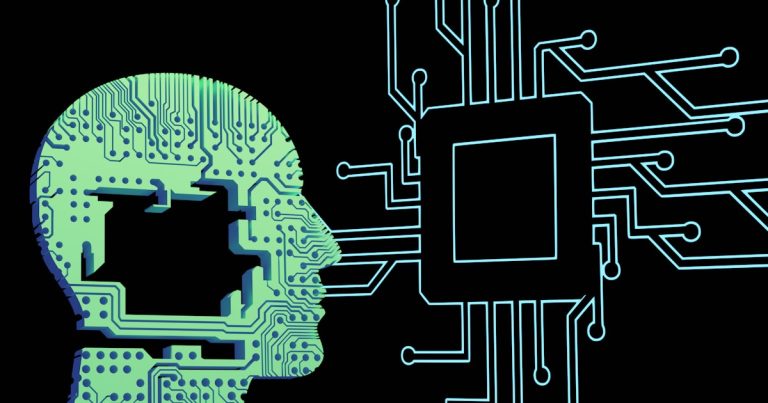
The Large Language Model that provides reasoning, language understanding, planning, and decision-making. Claude Opus 4.6, GPT-5, Gemini 3, Hermes models from Nous Research, or any open-weight model. The brain thinks. It understands your goal, breaks it into steps, decides what tools to use, and evaluates whether the result is correct.
The software layer that gives the brain hands. Access to a browser, terminal, file system, messaging platforms, APIs, memory, and the ability to take actions in the real world. OpenClaw, Hermes Agent, Claude Cowork, Perplexity Computer, Google Antigravity — these are all harnesses. The harness acts.
Neither layer is useful without the other. An LLM without a harness is a chatbot — smart but trapped in a text box. A harness without a good LLM is a dumb automation script that can’t adapt when something unexpected happens. The magic of agents is the combination: an LLM smart enough to plan and reason, connected to a harness that can execute those plans in the real world.
This distinction also explains why the agent landscape looks so complex. The brain providers (Anthropic, OpenAI, Google, Nous Research, Meta) build the reasoning engines. The harness builders (OpenClaw, Hermes, Perplexity, and the big tech companies themselves) build the execution frameworks. Some companies do both — Anthropic builds Claude (brain) and Claude Cowork/Computer Use (harness). Others specialize: Nous Research builds Hermes models (brain) and Hermes Agent (harness) as an integrated system where the models are specifically trained for tool calling and agentic reasoning.
For you as a business owner, this means: the agent you use can swap its brain. OpenClaw and Hermes Agent both support Claude, GPT-5, Gemini, and dozens of other models. You’re not locked into one AI provider. The harness stays the same; the brain behind it can change as models improve — or as prices drop.
The 5 Types of AI Agents in 2026
Not all agents do the same thing. The landscape has naturally organized into five categories, each solving a different problem:
1. Personal / Open-Source Agents
Always-on assistants that live on your device or server, connect to your messaging apps, and handle tasks across your entire digital life. Think of them as a personal operations manager that never sleeps. OpenClaw (307K GitHub stars) and Hermes Agent (Nous Research) are the leaders. Both are MIT-licensed, free, and run on a $5/month VPS or a spare Mac mini.
2. Desktop & Computer-Use Agents
Agents that can see your screen, control your mouse and keyboard, open applications, and operate software interfaces the way a human would. Claude Computer Use + Cowork, Perplexity Personal Computer, and OpenAI Operator are the frontrunners. These are the agents that make “delegate any task” a reality — if the task can be done on a computer, the agent can do it.
3. Coding Agents
Agents that write, test, debug, and deploy code autonomously. Google Antigravity, Claude Code, Cursor, and GitHub Copilot Agent are the major players. These are the most mature agent category — with the lowest failure rate and the most reliable outputs. Antigravity’s “Manager View” lets you run 5 agents in parallel working on different parts of your codebase simultaneously.
4. Voice Agents
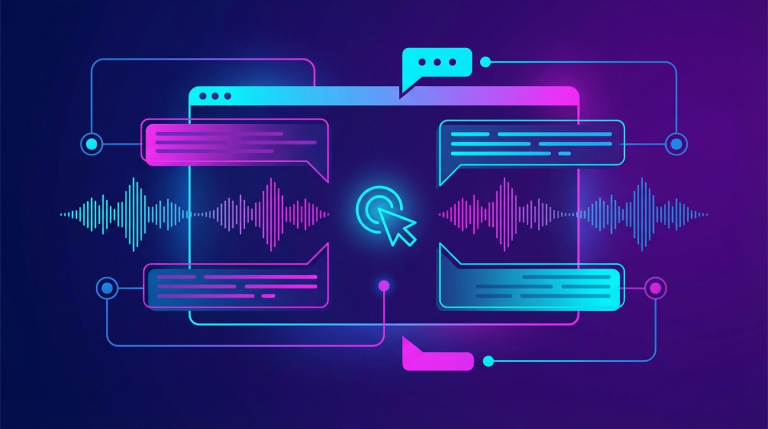
Agents that communicate through natural speech — replacing IVR menus, scripted chatbots, and call center agents. ElevenLabs Agents (formerly Conversational AI) leads this category with 70+ language support, real-time turn-taking, and integrations with CRM, helpdesk, and telephony systems. Over 2 million agents have been created on their platform, handling 33 million conversations in 2026 alone. The March 2026 IBM partnership signals enterprise readiness.
5. Proto-Agents (Automation Platforms)
This is where most business owners already live without realizing it. Make.com and Zapier are proto-agents: they connect tools, trigger workflows, and move data between platforms automatically. They lack autonomous reasoning (they follow pre-defined rules), but they’re the bridge between today’s SaaS stack and tomorrow’s agent-first world. Read our Zapier vs Make comparison for the current state. Within 12–18 months, these platforms will either evolve into full agents or be disrupted by them.
The Agent Landscape: Who’s Building What
The agent space is moving faster than any technology category we’ve tracked. Here are the key players as of March 2026:
OpenClaw
The project that started the agent revolution. Launched November 2025 (originally as Clawdbot), OpenClaw became the fastest-growing GitHub repository in history. Routes all messages through a central Gateway — WhatsApp, Telegram, Discord, iMessage, Slack, and browser chat land in one session manager. Model-agnostic (Claude, GPT-5, Gemini, open-weight models). Strongest for multi-channel business assistants. Runs on macOS, iOS, Android, and Linux. Jensen Huang called it “the next ChatGPT.” Nvidia released NemoClaw, an enterprise-grade version.
Hermes Agent (Nous Research)
The most technically interesting agent of 2026. Built by Nous Research, the lab behind the Hermes model family. The key differentiator: self-improving skills. When Hermes solves a complex task, it automatically creates a reusable “Skill Document” following the agentskills.io open standard. Next time you ask something similar, it doesn’t re-derive the solution from scratch — it builds on what it already learned. In testing, it completed research tasks 40% faster using self-generated skills. Multi-level memory (session, persistent, skill), 94 built-in skills, one-line installer, runs on a $5 VPS. Includes a migration tool for OpenClaw users.
Claude Computer Use + Cowork + Dispatch (Anthropic)
Anthropic’s full agent stack. Claude Computer Use gives Claude the ability to see, navigate, and control your desktop — clicking buttons, opening apps, filling spreadsheets. Cowork is the desktop interface for non-developers to assign tasks. Dispatch lets you message Claude from your phone and it completes the work on your desktop while you’re away. Research preview on macOS for Pro and Max subscribers. The most polished commercial agent experience in March 2026. Read our Claude review for the full picture.
Perplexity Computer + Personal Computer
Perplexity’s boldest bet. Computer is a cloud-based autonomous worker that orchestrates 19 frontier models simultaneously — Claude Opus for reasoning, Gemini for research, Grok for speed, GPT-5 for long-context recall. You describe an outcome; it creates sub-agents, delegates tasks, and delivers results. Personal Computer extends this to a dedicated Mac mini running 24/7 with local file access. The most ambitious agent product on the market — and the most expensive at $200/month. Enterprise version at $325/seat with compliance controls.
Google Gemini Agent (ex-Project Mariner) + Antigravity
Google is playing both sides. Gemini Agent (evolved from Project Mariner) handles browser-based tasks — clicking, scrolling, filling forms across websites. Antigravity is the agent-first IDE that lets developers spawn 5+ autonomous coding agents working in parallel, each with access to editor, terminal, and browser. Antigravity supports Claude Opus 4.6 and Gemini 3 Pro and is currently free in public preview. Google’s massive distribution advantage (750M+ Gemini users) makes this a serious play once agent features mature.
OpenAI Operator
OpenAI’s browser agent that performs tasks directly in Chrome — filling forms, making purchases, booking services. The interface is straightforward: describe what you want, watch the agent execute it in a visible browser window. Adoption has been slower than expected (under 1M weekly active users as of March 2026), but it’s integrated into ChatGPT’s massive user base. OpenAI hired OpenClaw’s creator, signaling a pivot toward more ambitious agent capabilities. Read our ChatGPT review for the broader platform context.
ElevenLabs Agents (Conversational AI 2.0)
ElevenLabs evolved from a text-to-speech company into a full agent platform. ElevenAgents lets you build conversational voice agents that answer phone calls, process payments (Stripe integration), book appointments (Cal.com), resolve support tickets (Zendesk), and hand off to humans when needed. 2M+ agents created, 33M conversations handled in 2026. The March 2026 IBM partnership for watsonx Orchestrate signals enterprise-grade readiness. Uses MCP for tool connectivity. If voice is part of your business, this is the platform to watch.
Make.com & Zapier
The automation platforms you’re already using are proto-agents. They connect tools, trigger workflows, and move data — but they follow pre-defined rules, not autonomous reasoning. Make.com (9.0/10 in our testing) offers the most powerful visual workflow builder. These platforms are the bridge: if you’re using Make.com or Zapier today, you’re already comfortable with the concept of automated workflows. Full agents are the next step. Read our Zapier vs Make comparison.
MCP: The USB Standard for AI Agents
There’s one piece of infrastructure that makes the entire agent ecosystem work: MCP (Model Context Protocol). Originally created by Anthropic and donated to the Linux Foundation in February 2026, MCP is the open standard that lets any AI agent connect to any tool or service.
Think of MCP as USB for AI. Before USB, every device needed its own proprietary connector. MCP does the same for agents: it provides a universal plug that lets any agent (OpenClaw, Hermes, Claude, Perplexity) talk to any service (Gmail, Slack, CRM, databases, payment systems). The adoption numbers tell the story: 10,000+ active MCP servers, 97 million+ monthly SDK downloads, contributions from OpenAI, Anthropic, Google, and Block. This is becoming the standard, and it’s why agents from different companies can interoperate.
For business owners, MCP means you’re not locked into one agent ecosystem. The agent you choose today can connect to the same tools through MCP regardless of which provider built it.
What This Means for Your SaaS Stack
The SaaS Disruption Is Already Starting
Here’s the uncomfortable truth for the SaaS industry: AI agents don’t need purpose-built interfaces. They operate existing software the way humans do — by clicking, typing, and navigating. This means an agent can use your CRM, email, spreadsheets, and browser directly, without the API integrations and middleware that entire SaaS businesses were built to provide.
The $300B SaaS valuation crash in early 2026 wasn’t caused by agents directly — but the market is pricing in a future where many connector-tools, workflow-builders, and single-purpose SaaS products become unnecessary. A February 2026 Gartner prediction: 40% of enterprise SaaS will include outcome-based (not seat-based) pricing by end of 2026. The business model is shifting because the value delivery is shifting.
What gets disrupted first: Automation connectors (Zapier, Make.com will either evolve or be replaced), simple scheduling tools, basic reporting dashboards, and any SaaS whose primary value is connecting two other tools. What survives: Tools with deep domain expertise, proprietary data, or network effects — your SEO suite’s keyword database, your email platform’s deliverability infrastructure, your hosting provider’s server fleet. Agents need data and infrastructure to act on. The tools that provide those will become more valuable, not less.
For your current tech stack, this means: don’t rip everything out and replace it with agents tomorrow. But start asking a different question about every tool you use: “Is this tool providing unique data or infrastructure, or is it just connecting other tools?” The first category gets more valuable in an agent world. The second category is at risk.
What to Do Right Now
Your 5-Step Agent Readiness Plan
- Start with research agents. Use Claude’s extended research or Perplexity for multi-step research tasks. Zero setup, immediate value. This builds your intuition for what agents can and can’t do reliably.
- Try a coding agent if you build anything. Claude Code or Google Antigravity (free) on a real debugging or feature development task. The time savings are real and the reliability is the highest of any agent category.
- Audit your stack for agent-readiness. Which of your tools expose MCP servers or APIs? Those will be the first to connect to agents. Tools without integration points become islands. Check our tech stack guide for the current recommended foundation.
- Pick one repetitive workflow to delegate. Not your most critical workflow — a boring, repetitive one. Daily report compilation, competitor monitoring, content research, lead enrichment. Set up an agent (Claude Cowork or Make.com as a stepping stone) and measure time saved.
- Stay informed but don’t over-invest. The landscape is changing weekly. Follow this page (we update quarterly) and wait for the dust to settle before making long-term infrastructure decisions. The businesses that learn agent workflows now will have a 12–18 month head start over those who wait until agents are mainstream.
📚 Read Next
Frequently Asked Questions
What is an AI agent?
An AI system that takes a sequence of actions to complete a multi-step goal. A chatbot answers questions. An agent does work — browsing the web, controlling your desktop, writing and executing code, managing files, sending emails, and operating software interfaces autonomously.
What’s the difference between an AI agent and a chatbot?
A chatbot is reactive — it responds to a prompt and stops. An agent is proactive — it takes your goal, breaks it into steps, uses tools (browser, terminal, file system, APIs), executes those steps, and delivers a result. Think of a chatbot as a person you ask questions. An agent is a person you delegate tasks to.
Will AI agents replace SaaS tools?
Not immediately, but the shift is underway. Agents operate existing software directly instead of relying on pre-built integrations. Over time, this reduces the need for SaaS products that exist primarily to connect other tools. Tools with unique data or infrastructure (your SEO suite’s keyword database, your hosting provider’s servers) become more valuable, not less.
Are AI agents safe to use for business?
Mixed. Commercial agents (Anthropic, Google, Perplexity) have permission systems, audit trails, and kill switches. Open-source agents require more user configuration. The rule: never give an agent unsupervised access to financial transactions, sensitive communications, or irreversible actions. Always maintain a human-in-the-loop for consequential decisions.
What’s the difference between the brain and the harness?
Should I start using AI agents now or wait?
Start now, start small. Begin with low-risk tasks: research, content drafting, data organization. Use established platforms (Claude Cowork, Perplexity Computer) rather than self-hosting. The businesses that learn agent workflows now will have a significant advantage when agents go mainstream.
How much do AI agents cost?
Open-source (OpenClaw, Hermes): free to run, $5–14/month for a VPS. Claude Pro with Cowork: $20/month. Perplexity Computer: $200/month. Google Antigravity: free (preview). Enterprise: $325+/seat. The hidden cost is LLM API usage — complex tasks consume significant token budgets.
What’s MCP and why does it matter?
MCP (Model Context Protocol) is the open standard that lets AI agents connect to external tools — like USB for AI. Created by Anthropic, now maintained by the Linux Foundation. 10,000+ MCP servers, 97M+ monthly SDK downloads. It means any agent can talk to any tool, and you’re not locked into one ecosystem.
This Is the Beginning
AI agents are to SaaS what SaaS was to on-premise software. The transition won’t happen overnight, but the direction is irreversible. The businesses that learn to work with agents now — starting with small tasks, building intuition, and understanding the brain-harness architecture — will operate at a fundamentally different level than those who wait. You don’t need to adopt everything today. You need to understand what’s coming and start building the muscle memory to work alongside autonomous systems.
This page was last updated in March 2026. The AI agent landscape changes weekly — we update this guide quarterly.
See our editorial policy →
Ready for More?
Once you understand the basics, it is time to choose the right tool. See our best AI agents for business in 2026, where we tested 8 platforms for real business workflows.